
Soul Eater is a dark fantasy anime that continues to hold a special place in the hearts of anime fans long after its original broadcast. Released in 2008 and produced by Studio Bones, the series is adapted from Atsushi Ōkubo’s manga of the same name. While it may appear at first glance to be a stylish action anime with comedic elements, Soul Eater gradually reveals itself as a thoughtful exploration of fear, madness, and personal growth. Its unique combination of tone, visual identity, and thematic ambition makes it one of the most memorable anime of its generation.
First Impressions and Story Foundation
From its opening episode, Soul Eater establishes a world that feels both whimsical and unsettling. The setting revolves around the Death Weapon Meister Academy, a school tasked with training students to fight supernatural threats and prevent the rebirth of the Kishin, a being born from accumulated madness. This concept allows the story to balance school-life comedy with high-stakes battles, giving viewers moments of levity alongside darker narrative turns.
The core story follows several pairs of students, each consisting of a Meister and a Weapon who can transform into a physical armament. Their mission is simple in theory: collect the souls of evil humans and witches to evolve into a Death Scythe. In practice, however, this goal becomes a backdrop for deeper emotional conflicts, rivalries, and philosophical questions. The series gradually shifts from episodic missions to a more serialized narrative, raising the emotional and thematic stakes as the characters mature.
Character Development and Relationships
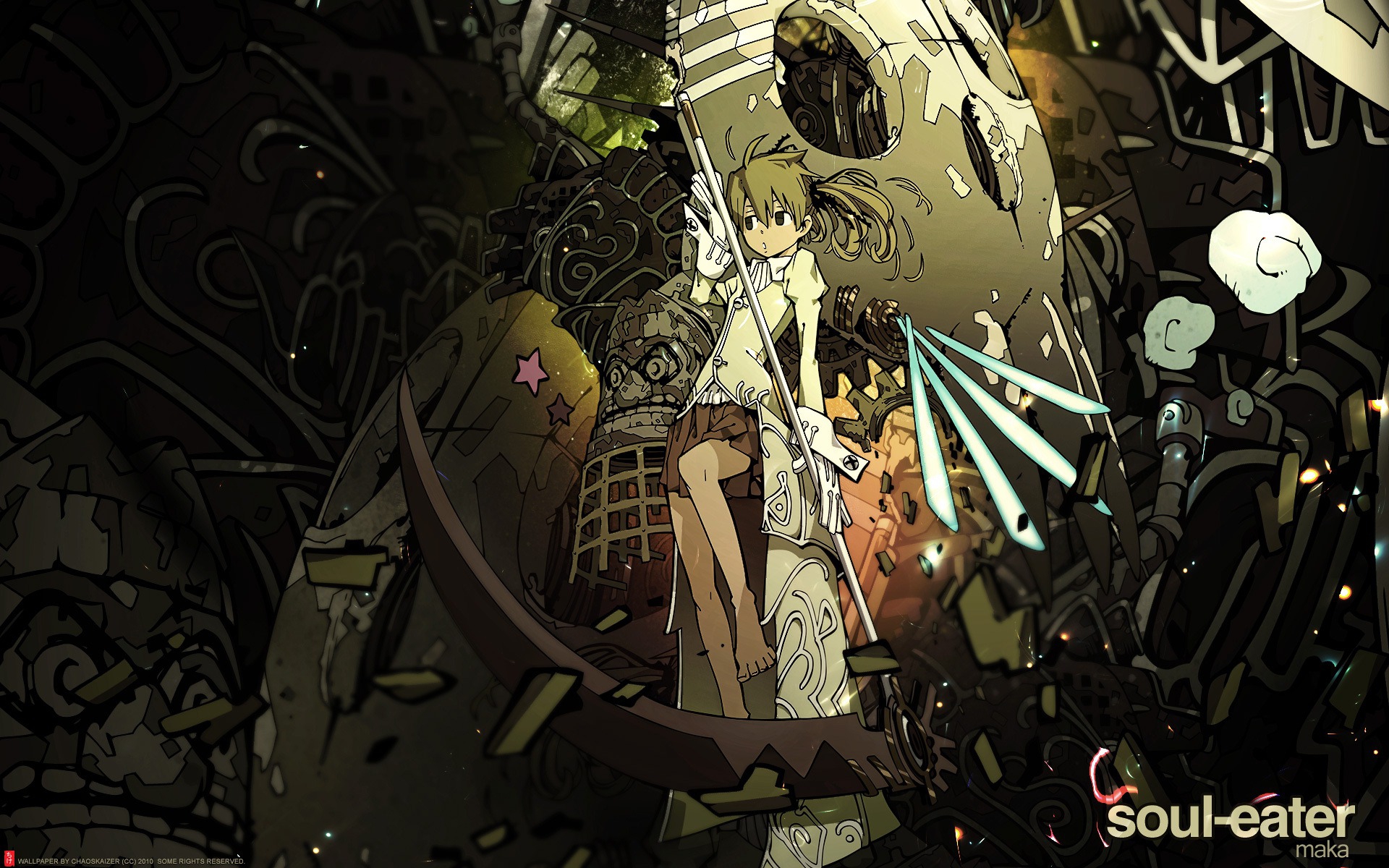
One of Soul Eater’s greatest strengths lies in its character-driven storytelling. Rather than focusing solely on power escalation, the anime invests time in showing how its characters change emotionally and psychologically. Maka Albarn serves as the emotional anchor of the series, representing discipline, empathy, and moral clarity. Her growth is not defined by raw strength but by her increasing ability to confront fear and madness without losing herself.
Soul Eater Evans, Maka’s partner, complements her personality with his relaxed demeanor and quiet determination. Their relationship is built on trust and emotional resonance, which is portrayed as just as important as combat skill. This idea of emotional synchronization reinforces the series’ message that strength comes from understanding oneself and others.
Other characters add complexity to the narrative in different ways. Black Star’s loud arrogance hides deep insecurity and a desperate need for recognition, while Tsubaki’s quiet loyalty reflects inner strength rather than submission. Death the Kid introduces both humor and introspection through his obsession with symmetry, which subtly reflects his desire for order in a chaotic world. These layered characterizations help Soul Eater stand out from more conventional shōnen anime.

Madness as a Central Theme
Madness is not merely an enemy in Soul Eater; it is a constant presence that challenges every character. The concept of madness wavelengths symbolizes emotional instability, fear, and despair, showing how easily the mind can be overwhelmed. Unlike many anime that treat mental struggle as something to be defeated outright, Soul Eater presents madness as something that must be understood and confronted.
The character of Crona embodies this theme most clearly. Raised in an environment of abuse and isolation, Crona’s arc is tragic and deeply emotional. Through Crona, the anime explores how trauma and fear shape identity, and how healing requires compassion rather than brute force. These moments elevate Soul Eater beyond action spectacle, offering viewers a more introspective and human narrative experience.
Visual Style and Direction
Soul Eater’s art direction is instantly recognizable. The anime embraces exaggerated proportions, sharp angles, and gothic motifs that give its world a dreamlike quality. Buildings curve unnaturally, the moon leers with a twisted grin, and shadows often feel alive. This distorted visual language reinforces the idea that the world itself is affected by madness.
Studio Bones’ animation emphasizes expressiveness over realism, particularly during action scenes. Fights are fluid and dynamic, often using bold camera movements and stylized effects to convey emotional intensity. This approach allows the anime to feel energetic and creative, even when working within the technical limitations of its time. The consistency of its visual identity plays a major role in why Soul Eater remains so visually memorable today.

Soundtrack and Emotional Impact
Music is another area where Soul Eater excels. The opening and ending themes are iconic, blending rock, electronic, and atmospheric elements that perfectly match the anime’s tone. Tracks like “Resonance” capture both the cool aesthetic and underlying darkness of the series, leaving a lasting impression on viewers.
The background score enhances emotional scenes by shifting seamlessly between eerie tension and heartfelt warmth. Quiet moments are often accompanied by subtle, melancholic melodies that highlight character vulnerability. In scenes involving madness or fear, distorted sounds and unsettling rhythms pull the audience into the characters’ psychological states. This careful use of sound design strengthens the anime’s emotional impact and narrative immersion.
Anime Original Ending and Fan Reception
One of the most discussed aspects of Soul Eater is its divergence from the manga in the latter half of the story. As the anime progressed, it moved toward an original ending that simplified some of the manga’s more complex ideas. This decision has divided fans, with some appreciating the anime’s hopeful conclusion and others preferring the darker, more detailed resolution found in the manga.
Despite these criticisms, the anime ending remains thematically consistent with Soul Eater’s core message about courage and emotional strength. While it may lack the narrative depth of the source material’s conclusion, it still delivers a satisfying emotional payoff for viewers who followed the characters’ journeys from the beginning.
